
HVS Middle East & Africa Survey Reveals Strong Investor Confidence in Egypt’s Hospitality Sector
HVS Middle East & Africa has unveiled its 2026 Egypt Hospitality Investment & Market Sentiment Survey, highlighting strong investor confidence.
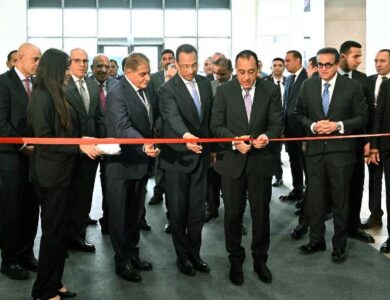
The findings were announced during the Future Hospitality Summit Egypt, held in Cairo.
The research gathered insights from investors, developers, hotel owners, lenders and key hospitality industry stakeholders.
Its findings reveal that 97% of respondents maintain a positive outlook towards Egypt’s hospitality investment prospects.
Also, participants expressed confidence in the market’s ability to accommodate upcoming hotel developments without significant oversupply concerns.
The results indicate that tourism demand is no longer considered the industry’s primary investment challenge.
North Coast Emerges as a Leading Investment Destination
The survey highlights the North Coast as Egypt’s most attractive hospitality investment destination, attracting 39% of responses.
Greater Cairo and Giza followed with 35%, while the mainland Red Sea region received 16%.
Also, 82% of respondents said recent large-scale investment commitments strengthened their confidence in the North Coast.
However, seasonal tourism remains a significant obstacle, with 75% identifying year-round demand as a major challenge.
Coastal and Red Sea leisure tourism is expected to generate the strongest demand growth, according to 75%.
Cultural and heritage tourism ranked second, attracting 64% of respondents expecting increased demand.
Also, despite these promising expectations, only 3% selected Luxor, Aswan and the Nile corridor as investment priorities.
Gulf Investors Expected to Drive Capital Inflows
GCC investors are expected to become the leading source of hospitality investment capital over the next five years.
Around 45% of respondents identified Gulf investors as the primary funding source for upcoming projects.
By comparison, Egyptian private investors received 19%, highlighting the expected importance of regional capital.
Also, foreign exchange exposure emerged as the leading investment concern, accounting for 32% of responses.
Capital-related challenges collectively represented 55% of the concerns identified by survey participants.
The findings underline the importance of improving financing accessibility and strengthening investment conditions.
Infrastructure and Connectivity Shape Future Growth
Air connectivity and airport infrastructure emerged as essential priorities for Egypt’s tourism ambitions.
Around 54% of respondents considered existing aviation capacity and international connectivity insufficient.
Nevertheless, 79% believe Egypt could welcome approximately 30 million international visitors by 2030.
Also, investors highlighted tax and investment incentives as their preferred policy measures, receiving 43% support.
Airport and transport infrastructure improvements followed with 39%, while faster licensing and approvals received 36%.
Hala Matar Choufany, President of HVS Middle East & Africa, described the sector as reaching an important turning point.
She emphasized that investor discussions increasingly focus on capital deployment, connectivity, workforce development and project execution.
The survey concludes that Egypt maintains strong hospitality investment prospects, provided confidence translates into financing, infrastructure development and completed projects.
Also, the growing interest in coastal destinations creates opportunities to diversify investment across Egypt’s tourism offerings.
The findings reinforce Egypt’s position as an important regional hospitality market, with substantial opportunities for future investment.